Another Community Exhibition!

Does Google Know Everything? A Little Discovery in Burgh on Bain
Does the Internet know everything? Well, in theory, yes. Google seems to have an answer to practically every question. The trouble is that when I ask something quite simple, I am often rewarded with an extraordinarily complicated explanation, usually involving several things I never wanted to know in the first place.
Does this mean I don't know how to ask questions? Sometimes, probably. But when I asked a couple of times for a simple, universally known fact about the Mann brothers, I received answers so peculiar that I shall spare you the details. Some mysteries are best left alone.
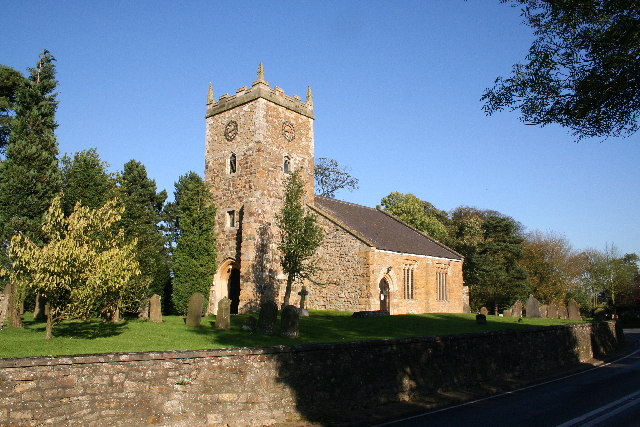
And then there are places about which the Internet seems to know surprisingly little. In that case, perhaps one has to do the writing oneself!
A few days ago, my work was exhibited at St Helen's Church in Burgh on Bain,(https://en.wikipedia.org/wiki/Burgh_on_Bain) and I was genuinely impressed by the quality and variety of the works. It was one of those lovely occasions when you realise just how much creativity is quietly going on around you.
There was a painting by a ploughman – rather naïve, perhaps, and not quite Henri Rousseau, but perfectly good to go on a proud place on somebody's wall. There was embroidery,lace-making (you know anyone who is ill-capable of making it?) , some wonderfully complicated cross-stitch, and a very clever herbarium arranged as an unexpectedly attractive composition ( plants that were sleeping forgotten from 1917 or something. Somebody had clearly put a great deal of thought into preserving nature in a decorative form.
A young man, Kody, had brought along his stools and benches, showing that creativity need not be confined to a canvas.

The couple who had brought everyone together had their own contributions, too: a herbarium and a collection of tiny sketches, executed by a remarkably steady hand. It was a real mixture of skills, personalities and artistic approaches. No two people seemed to be doing quite the same thing, which was precisely what made it interesting.
But the exhibition was only part of the discovery.
I started looking into the church's history and stumbled across some fascinating old information. St Helen's is a Grade II* listed building, with its earliest suBy Richard Croft, CC BY-SA 2.0, https://commons.wikimedia.org/w/index.php?curid=9184240rviving features dating back to the 11th century. It has been altered and enlarged over the centuries, with a major restoration in 1871–72. Its Norman tower arch is particularly interesting, as is a blocked, round-headed doorway tucked away in the north aisle. I rather like the idea of a little doorway that has quietly kept its secrets for centuries.
And the history of the surrounding landscape goes back much further still.
Not far from Burgh on Bain is a Neolithic long barrow, an ancient burial mound dating back thousands of years. It is relatively modest in size – about 27 metres long and 14 metres wide – and is marked on Ordnance Survey maps as a tumulus. It stands on a ridge overlooking the River Bain valley. Worked flint found nearby suggests that people were active in this landscape in prehistoric times.
So, long before the church, before the village as we know it, and certainly before Google, people were already leaving their mark on this part of Lincolnshire.

Churches, of course, were never simply places for Sunday worship. They were the social centres of their communities, places where people met, exchanged news, showed off their Sunday best, celebrated marriages, baptised children, mourned their dead and, no doubt, occasionally admired somebody else's new hat. People found love there, not exclusively the love of God, either!
They were places where the whole business of village life unfolded. And I suspect that after all the serious matters were attended to, quite a few people headed for the pub.
Perhaps that is what I enjoyed most about the exhibition. For a few hours, this old church became a meeting place again, full of people, conversation, handmade objects and shared enthusiasm. Different generations, different skills and different ways of seeing the world, all under one very old roof.
And perhaps that answers my original question. Google does not know much about Burgh on Bain, but it cannot quite reproduce the pleasure of standing inside an old church, looking at somebody's embroidery, chatting to a lace-maker, or discovering that the person next to you has spent hours creating a tiny work of art.
Some things are better discovered in person.
And some things, clearly, are still worth writing about.
Comments