How to Live as an Artist: Hobby, Career, or a Way of Life


Some people make art and never call themselves artists. Others sell one painting and feel the word shift their whole identity. The hard part is not choosing the label. The hard part is deciding what kind of life can hold your art without crushing it.
Living as an artist does not always mean quitting your job, renting a cold studio, and hoping inspiration pays the bills. It can mean protecting a sketchbook practice after work. It can mean building a career from commissions, teaching, exhibitions, writing, design, music, performance, or craft. It can also mean treating art as the centre of how you notice the world, even if it never becomes your main income.
The real question is not, “Am I a real artist?” The better question is, what relationship with art helps me live honestly, sustainably, and with care?

Start by admitting what art gives you
Before asking whether art should be a hobby or a career, ask what it does for your life.
Art can give you many things:
A private place to think
A way to process grief, joy, anger, love, or confusion
A skill you want to master
A connection to other people
A possible income
A sense of purpose
A reason to look more carefully
Those are not the same needs. Mixing them up causes pain.
If art is where you go to recover from the world, turning it into a business too quickly may make it feel unsafe. If art is the work that makes you feel most alive, keeping it hidden forever may create resentment. If art is mainly a craft you want to improve, you may need structure, feedback, and regular practice more than romance or big life decisions.
There is no shame in any of these motives. Making songs for yourself is not smaller than playing paid gigs. Painting after your children sleep is not less real than painting in a gallery. Writing poems that nobody reads can still change the shape of a life.
The mistake is letting other people define the value of your art too early.
When art works best as a hobby
Calling art a hobby can sound dismissive, but it should not. A hobby can be serious, skilled, meaningful, and lifelong. The word simply means the art is not carrying the full weight of your rent, status, or identity.
That can be a gift.
When art is a hobby, you can follow curiosity without asking whether each choice is sellable. You can try lino printing, watercolour, fiction, photography, dance, or pottery without building a “market position”. You can make bad work in peace, which is one of the conditions for eventually making good work.
Art may be better kept as a hobby if:
You love making it but dislike public pressure
You have another career that supports your life well
You feel your creativity dries up when money enters the room
You want art to remain a place of play
You are still discovering what kind of artist you are
A hobby also protects you from tying your self-worth to response. When a painting does not sell, when a poem is rejected, when a song gets no audience, it can hurt. If your life is already stable elsewhere, the hurt may pass through you without becoming a crisis.
This does not mean you should be casual. A hobby can have discipline. You can keep studio hours, take classes, show your work locally, or collaborate with others. The difference is that the practice feeds your life rather than having to fund it.
When art asks to become a career
Sometimes art becomes too large to fit into spare time. You keep returning to it. You improve. People respond. You start to see where your work could meet a real need or desire in the world.
A career in art does not always look like one clean path. Most working artists combine several streams. A visual artist may sell pieces, teach workshops, take illustration jobs, apply for residencies, and run community projects. A musician may perform, record, teach, compose for others, and do session work. A writer may publish books, edit, lead courses, write essays, and take commissions.
That variety is not failure. It is often how creative work survives.
Art may be ready to become a career if:
You can work even when inspiration is low
You can accept feedback without losing your centre
You understand that admin, pricing, pitching, and deadlines are part of the work
You have evidence that people value what you make
You are willing to learn the practical side slowly
You can build financial buffers before taking big risks
The romantic image of the artist often leaves out invoices, contracts, tax returns, storage, materials, travel, rehearsal time, editing, rejection, and waiting. These are not separate from the artist’s life. They are part of choosing art as work.
A career also changes your relationship with freedom. You may gain freedom from a job that does not fit you. At the same time, you may lose some freedom in the art itself. Clients have needs. Audiences have expectations. Deadlines arrive whether you feel inspired or not.
This is why it helps to keep two kinds of practice:
Paid practice
Private practice
Work made for clients, buyers, publishers, venues, students, or commissions.
Work made with no immediate demand, where experiments and deeper questions can live.
Without private practice, a career can become a production line. Without paid practice, a career may never become financially possible. The balance may shift each year, but both matter.

When art is a way of life
There is another path, harder to describe but perhaps the most important. Art can be more than a hobby and wider than a career. It can be a way of living.
This does not mean every hour is beautiful. It means you move through life with the attention of an artist. You notice light on a wall. You hear rhythm in ordinary speech. You collect gestures, textures, colours, questions. You allow your inner life to matter. You make meaning from what others rush past.
An artist’s way of life is not about drama or specialness. It is about attention, practice, and response.
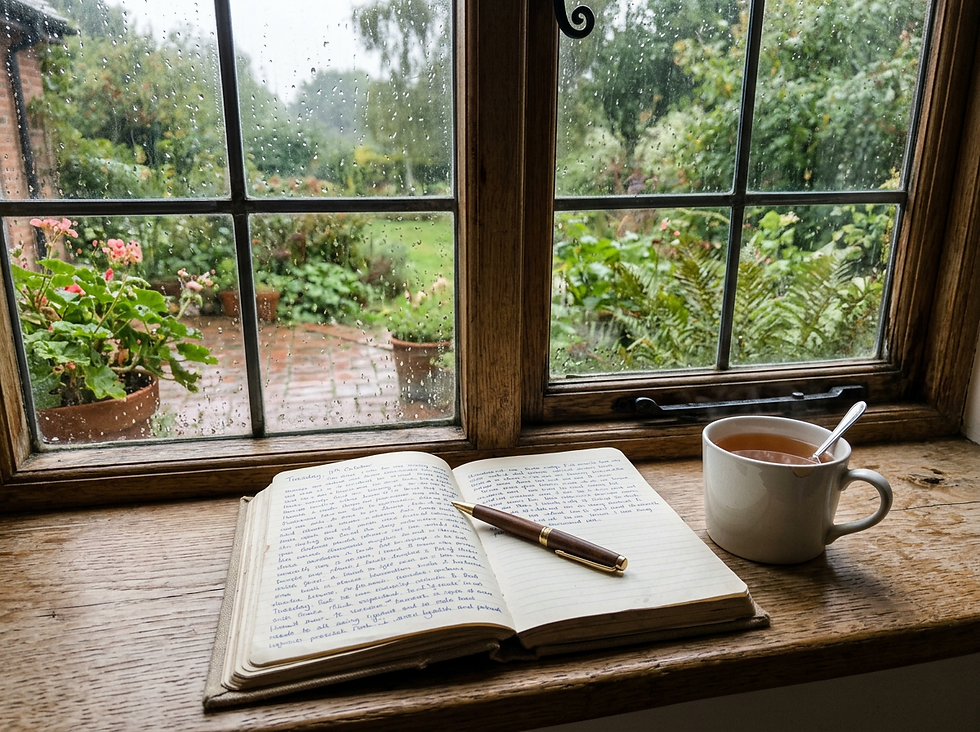
You can live this way while working as a nurse, builder, teacher, parent, chef, carer, student, gardener, or driver. The art may appear in small forms. A notebook. A song. A careful meal. A garden wall. A hand-stitched repair. A photograph taken on a grey afternoon. A story told at the kitchen table.
This is where the idea of karma can be useful, if we treat it with care. In many traditions, karma is linked to action and consequence. In everyday terms, it asks a simple question: what kind of person am I becoming through what I repeat?
If you repeat envy, you become more envious. If you repeat attention, you become more awake. If you repeat generosity, you become more open. If you repeat practice, you become more skilled. If you repeat fear, you make your world smaller.
Art is not automatically virtuous. Artists can be vain, selfish, careless, or cruel like anyone else. But the practice of art can train certain qualities: patience, honesty, sensitivity, courage, and humility. It can ask you to look again rather than judge quickly. It can ask you to make something rather than only consume.
So yes, art can be a kind of life karma, not in the sense that the universe owes you success, but in the sense that your repeated creative actions shape your character.
Do not confuse suffering with seriousness
Many artists inherit a harmful myth: if you are not suffering, you are not serious. This myth has damaged countless lives.
Pain may appear in art. It may even push someone toward making. But pain is not a qualification. Exhaustion is not proof of talent. Poverty is not a spiritual badge. Chaos does not make the work deeper by itself.
A sustainable artist’s life needs ordinary foundations:
Enough sleep when possible
Food that supports your body
Some form of movement
Honest relationships
Time away from screens
Clear boundaries around work
A simple way to track money
A place, however small, where materials can live
These things may sound unpoetic. They are what let the poetry continue.
If you want art to last for decades, build a life that does not constantly injure the person making it. Protect your nervous system. Protect your relationships. Protect the part of you that can still wonder.
The world has enough burnt-out artists. It needs artists who can stay human.

Choose your model for this season
You do not have to choose one identity forever. The best answer may change as your life changes.
At one stage, art as a hobby may be wise. At another, a career move may be possible. Later, you might return to a quieter practice. Parenthood, illness, debt, grief, study, love, age, and opportunity can all change the shape of time.
Instead of asking, “What should I be for the rest of my life?”, ask, “What does my art need from me this year, and what can I honestly give?”
Here are three workable models.
The protected hobby model
This model suits people who need art as a private or semi-private practice. The key is to give it real space without forcing it to become income.
Try this:
Set a regular weekly time
Keep materials easy to reach
Take one class or join one group if you need support
Finish small projects rather than only starting large ones
Share only when sharing feels useful
The danger is neglect. If a hobby matters, do not leave it to the tired scraps of your week.
The gradual career model
This model suits people who want to earn from art but need stability. It avoids sudden dramatic leaps.
Try this:
Keep your current income while building proof
Track costs, sales, time, and demand
Learn basic pricing and contracts
Build a small body of finished work
Say yes to some opportunities and no to poor-fit ones
Save before reducing other paid work
The danger is impatience. A creative career often grows through slow trust, not one grand announcement.
The whole-life artist model
This model suits people who see art as a guiding practice, whether or not it pays.
Try this:
Keep a daily noticing habit
Read, listen, watch, and observe beyond your own field
Make small things often
Let ordinary life feed the work
Practise generosity with other artists
Measure success by depth as well as recognition
The danger is vagueness. If everything is art, you may stop doing the actual work. Keep making.
Money matters, but it is not the only measure
Artists often swing between two false beliefs. One says money ruins art. The other says money proves art’s value. Both are too simple.
Money can give time, materials, space, and dignity. Wanting to be paid fairly is not greed. If someone benefits from your skill, payment can be a form of respect.
At the same time, money does not measure the full worth of art. Some of the most meaningful work may never sell. A lull in income does not mean your work is empty. Popular taste, access, timing, location, class, confidence, and networks all affect who gets paid.
A healthy artist learns to speak both languages:
The inner language of meaning, curiosity, and truth
The outer language of price, time, rights, and exchange
If you avoid money completely, you may become vulnerable. If you chase money only, the work may lose its pulse. The task is not purity. The task is alignment.
Ask yourself:
What do I need to live with basic stability?
What kind of work am I willing to sell?
What work must stay free from market pressure?
What is the minimum I need to charge to avoid resentment?
What kind of success would still let me recognise myself?
These questions are not cold. They are part of caring for the work.

Let discipline and mystery live together
Artists often argue about discipline and inspiration, as if only one can lead. In real life, they need each other.
Discipline gets you to the page, the instrument, the wheel, the rehearsal, the darkroom, the bench. Mystery keeps the work alive once you arrive.
If you only wait for inspiration, you may rarely finish. If you only force output, your work may become stiff. The craft is learning when to push and when to listen.
A simple rhythm helps:
Gather
Notice, read, walk, listen, collect images, live your life.
Make
Set a timer, enter the practice, produce without judging too early.
Shape
Edit, revise, sand, rehearse, cut, rebuild.
Rest
Step away so the work can breathe and you can return with clearer eyes.
Share or store
Decide whether the piece belongs in the world, in a drawer, or as a lesson for the next attempt.
This rhythm works for hobbyists, professionals, and lifelong artists. It respects both labour and the unknown.
Your answer does not need to impress anyone
So, is it better to keep art as a hobby, make it a career, or live it as a way of life?
The most honest answer is that each path can be right, and each has its cost.
A hobby protects freedom, but it needs commitment. A career gives art more space, but it brings pressure. A way of life gives art deep roots, but it still needs concrete practice.
Do not choose the version that looks most impressive from the outside. Choose the version that lets you keep making without abandoning yourself.
If you are unsure, start modestly. Give your art regular time for three months. Finish one small body of work. Notice how you feel when you make, when you share, and when you imagine doing more. Pay attention to energy, not fantasy.
An artist’s life is built through repeated acts. A page filled. A song practised. A pot thrown. A dance rehearsed. A photograph taken. A silence listened to. Over time, those acts become more than output. They become a way of meeting life.
That may be the clearest sign. Whether art is your hobby, your career, or your daily path, it should help you become more awake, more honest, and more fully yourself.

Comments